Layer Longevity Starts at Rearing: Building the Foundation for Long-Term Egg Production

Modern laying hens are capable of maintaining high productivity for much longer than in previous decades. While production cycles once commonly ended around 72 weeks of age, today's genetic improvements have enabled flocks to remain productive well beyond 90 weeks. Achieving this extended performance, however, requires much more than genetics alone.
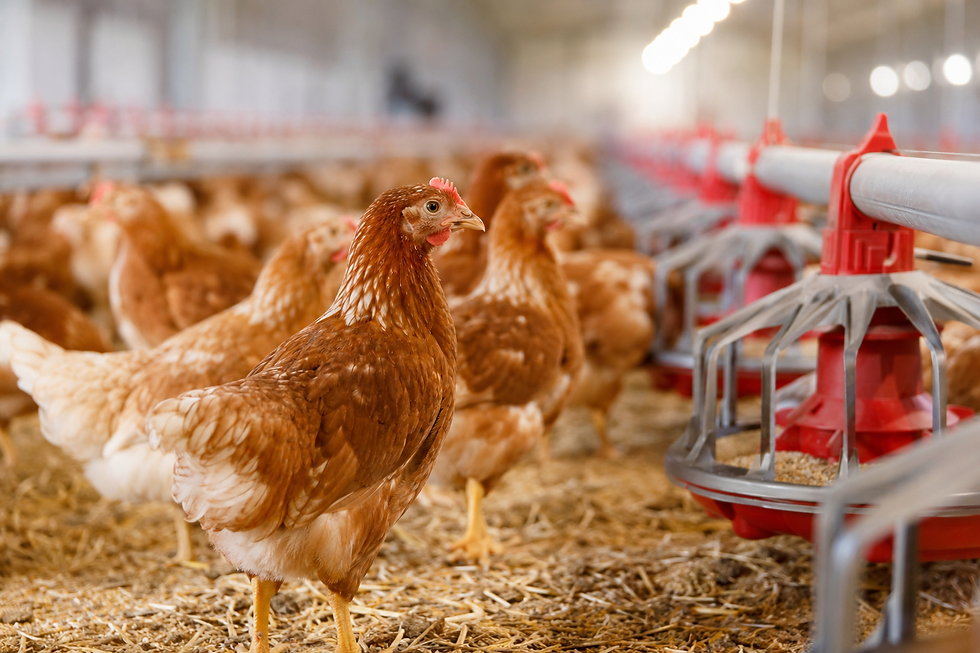
Successful layer longevity begins long before the first egg is laid. The rearing phase plays a decisive role in developing the body structure, digestive capacity, and health status that will support birds throughout an extended production cycle.
Why Rearing Matters for Long-Term Performance
At the onset of egg production, pullets face a demanding physiological transition. Their nutrient requirements increase rapidly, reproductive organs continue developing, and calcium reserves are mobilized for eggshell formation. At the same time, birds have a limited feed intake capacity.
If feed intake capacity and body development have not been adequately established during rearing, birds may experience:
Reduced growth rates or body weight loss at the beginning of lay
Lower production persistency after peak production
Increased stress and health challenges
Poor shell quality and reduced longevity later in life
These early setbacks can negatively affect performance throughout the entire laying cycle.
Body Development: The Foundation of Longevity
One of the most important indicators of successful rearing is body weight development. During the first five to six weeks of life, skeletal and muscular tissues grow rapidly, forming the structural framework that supports the hen throughout her productive life.
Achieving target body weight during this critical stage is essential.
Birds that are underweight during the first weeks may later compensate by depositing excess fat rather than developing lean body tissues. Even if they eventually reach target weight, improper body composition can lead to:
Increased risk of obesity
Higher incidence of prolapse
Reduced productivity and persistency
Regular body weight monitoring during rearing therefore remains one of the most effective management tools for ensuring flock uniformity and future performance.
Feed Particle Distribution Matters
Proper skeletal development depends not only on nutrient formulation but also on feed particle distribution.
Fine feed particles contain many essential vitamins and minerals. If birds preferentially consume only coarse particles, nutrient intake becomes unbalanced.
Training pullets to empty feeders once daily encourages consumption of these finer particles, helping ensure that all nutrients necessary for bone development are consumed consistently.
Developing Feed Intake Capacity
As birds approach sexual maturity, feed intake capacity becomes increasingly important.
Research and field observations have shown that introducing a lower-density developer diet with higher fiber levels after nine to ten weeks of age can help stimulate digestive tract development.
Higher fiber diets promote expansion of digestive organs such as:
Crop
Proventriculus
Gizzard
Intestines
A well-developed digestive system allows hens to consume and utilize nutrients more efficiently during the demanding early stages of egg production.
Practical Considerations
To optimize feed intake capacity:
✓ Ensure pullets reach body weight targets before switching to developer diets.
✓ Use appropriate dietary fiber levels to stimulate gut development.
✓ Maintain adequate water availability.
✓ Monitor flock uniformity regularly.
These practices can significantly improve the birds' ability to cope with the metabolic challenges of early lay and support sustained performance over longer production cycles.
Genetics and Management Must Work Together
Advances in genetics have provided producers with hens capable of exceptional productivity and persistency. However, realizing this potential requires equally strong management and nutritional practices.
Mistakes made during rearing are difficult—and often impossible—to fully correct later in production. Small details, such as achieving target weight in the first six weeks and developing sufficient feed intake capacity, can have lasting effects on flock profitability and longevity.
Preparing hens for a long productive life truly starts during the rearing period.
Expert Insight from H&N International
This article is adapted from "Layer Longevity Starts at Rearing", originally written by Xabier Arbe and published in H&N International Technical Tips 1/2017.
H&N International highlights that while genetics have improved layer persistency and production cycles, achieving the full genetic potential depends heavily on management and nutrition practices established during rearing.
Source:
Arbe, X. (2017). "Layer Longevity Starts at Rearing." Technical Tips 1/2017. H&N International GmbH, Germany.

Continue Learning with Progressus Layer AgriSchool
Understanding the relationship between pullet development, nutrition, feed management, and long-term laying performance is increasingly important for today's egg producers and nutrition professionals.
The Progressus Layer AgriSchool provides practical and science-based training designed to help feed millers, nutritionists, veterinarians, and poultry producers optimize layer performance throughout the production cycle.
Participants gain insights into:
Layer nutrition and feeding strategies
Feed formulation and ingredient evaluation
Rearing management and flock uniformity
Egg production performance and persistency
Current challenges and industry developments
Whether you are looking to improve flock longevity, maximize egg output, or strengthen your technical knowledge, Layer AgriSchool offers a valuable opportunity to learn from industry experts and connect with professionals across the poultry sector.
Explore upcoming Layer AgriSchool programs and continue building the foundation for long-term success in egg production.